


Personel i Zarządzanie 8/2004 z 01.08.2004, str. 44
Data publikacji: 27.06.2018
Guide to HRM in English
Chapter 10 - Employee Well-Being
Rozdział 10 - Rozwój zawodowy
1. Health & Safety
1. Bezpieczeństwo i higiena pracy
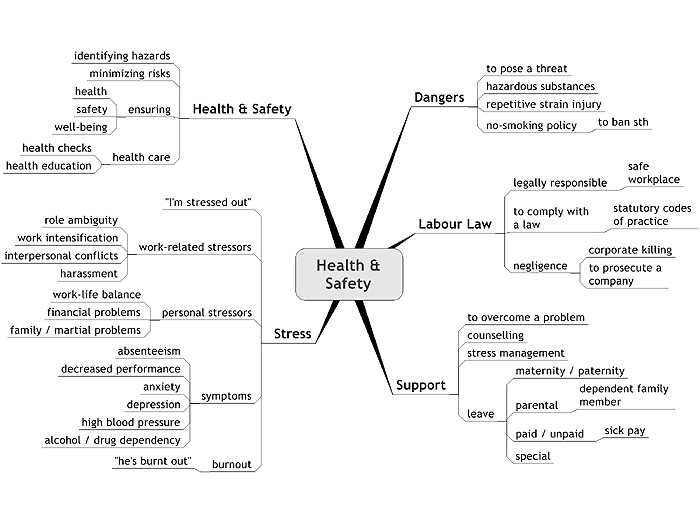
In HRM, health and safety is the process of identifying potential hazards and planning ways to minimize risks to ensure the health, safety and well-being of employees. Indeed, many companies also offer occupational health care, which includes health checks and health education.
Under employment or labour law every company is legally responsible for providing a safe workplace for its employees. All companies are obliged to comply with statutory codes of practice set by the national government.
Employees face many dangers at work which may pose a threat to their health. For example, they may be exposed to hazardous substances, such as chemicals, dust or bacteria. Any type of injury caused by fast, repetitive work is called a repetitive strain injury (RSI), and VDU regulations exist to protect employees who use visual display units (VDU’s), i.e. computer monitors. Finally, many companies have introduced a no-smoking policy in order to make the workplace a smoke-free environment. In such a case, we say that the company has smoking.

 POTRZEBUJESZ POMOCY?